

Mid-Summer Camp Staff Evaluations: Why & How to Get Started

I spent years as a camp director doing staff evaluations the way many camp leaders do: at the end of summer, rushed, half from memory, and delivered to tired counselors who were already mentally checked out and packing their cars.
Sound familiar?
We'd sit across from a college-age staff member who had poured everything into weeks of camp. Then say something like, "Overall, really great summer. We'd love to have you back." And we meant it.
But we had given that staff member almost nothing to grow from.
No specifics. No structure. No clarity on where they excelled or where they needed to improve. Nothing they could apply to their next job, a leadership role, or another summer.
That’s not a staff evaluation. That’s a send-off.
I now know that staff evaluations deserve the same intentionality we give to registration systems, program schedules, and safety protocols.
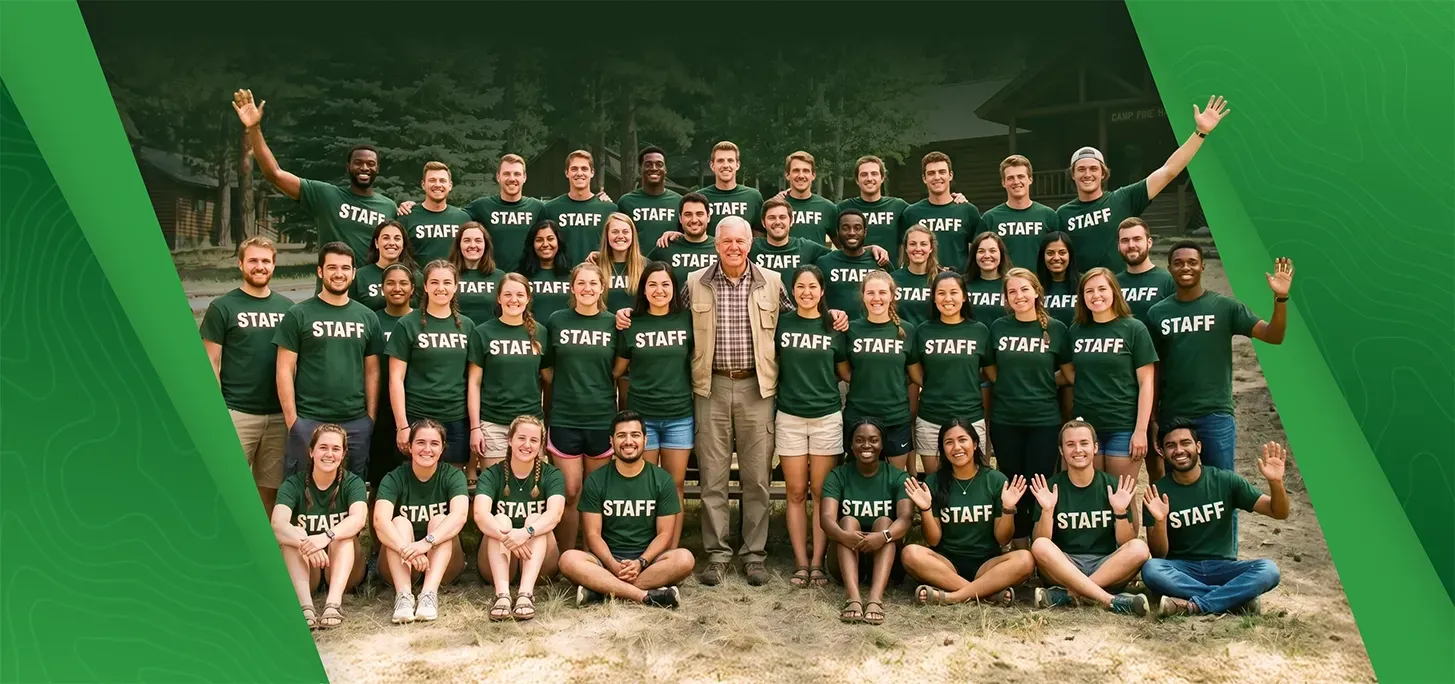
Your staff are at the root of your camp's success. When you make time for official feedback mid-summer, you give counselors and team members the chance to grow while there’s still time. And when they grow, campers get a better experience.
What Is a Mid-Season Camp Staff Evaluation?
A mid-summer staff evaluation is a structured check-in that helps camp leaders recognize strong performance, address concerns early, and give counselors clear feedback while there is still time to improve.
It is not a generic HR form. It is not a disciplinary meeting. And it should not feel like a surprise report card.
At its best, a staff evaluation is a coaching conversation.
It answers questions like:
- What is this summer staff doing well right now?
- Where have they grown since training or the start of the season?
- What behavior needs to continue?
- What behavior needs to improve before the next check-in?
- What support, training, or clarification would help them succeed?
That kind of feedback is much more useful in the middle of the season. Not in the final week, when most staff are exhausted, sentimental, and already thinking about going home.
Why Mid-Summer Camp Staff Evaluations Are Key to Camp Leadership
Here’s the reality of staffing a camp: the talent pipeline is tightening.
Recruiting takes time. Training takes resources. And turnover affects more than operations.
Campers notice when their favorite counselor doesn’t return. Families notice when the faces at drop-off feel unfamiliar. Camp culture is harder to maintain when staff members are constantly changing.
A 2024 report from the National Recreation and Park Association found a key staffing challenge to be hiring qualified candidates who could work the whole summer. The American Camp Association (ACA) has also identified seasonal staff hiring and retention as a major issue in the camp industry.
The good news? A strong summer camp staff evaluation process can support retention because it tells staff: we see you, we value you, and we are invested in your growth.
That is more than documentation. It's mentorship.
Mid-summer evaluations create space for two-way conversations that keep camp staff engaged, supported, and more likely to consider returning next summer.
Evaluations Aren't a Form. They're a Commitment.
The ACA’s Staff Impact Study connects retention and stronger camp work experiences with meaningful work, support, and feedback systems. Staff evaluations built around clear criteria and delivered with genuine investment fit that framework.
The ACA also recommends that performance evaluations be conducted at least twice during the summer. Once early in the season and once near the end to reflect on growth, performance, and the full arc of the summer.
The first eval isn't a report card. It's a conversation starter.
- How are things going?
- Are you meeting expectations for your role?
- What do you need from me to improve?
Having this discussion early on helps you provide meaningful guidance, clarify goals, and follow up later with an expected conclusion.
Inspect what you expect. Don't just hope something happens, check that it's happening. If you expect a standard, you have to actually verify it's being met — expectations alone don't enforce themselves.
Why Waiting Until the End of Summer Can Raise the Stakes
End-of-season evaluations still matter. They can help with rehire decisions, leadership recommendations, and final reflection. But if that's the only time a counselor receives formal feedback, it comes too late to meaningfully help them or your camp.
By the final week, conflicts have already escalated. Burnout has already affected campers and morale. Small behavioral issues may have already become destructive patterns.
When the final evaluation is the only evaluation, the stakes feel higher. Instead of coaching, it can feel like confirmation of what a staff member already believes — or a blindside with information they wish they had heard sooner.
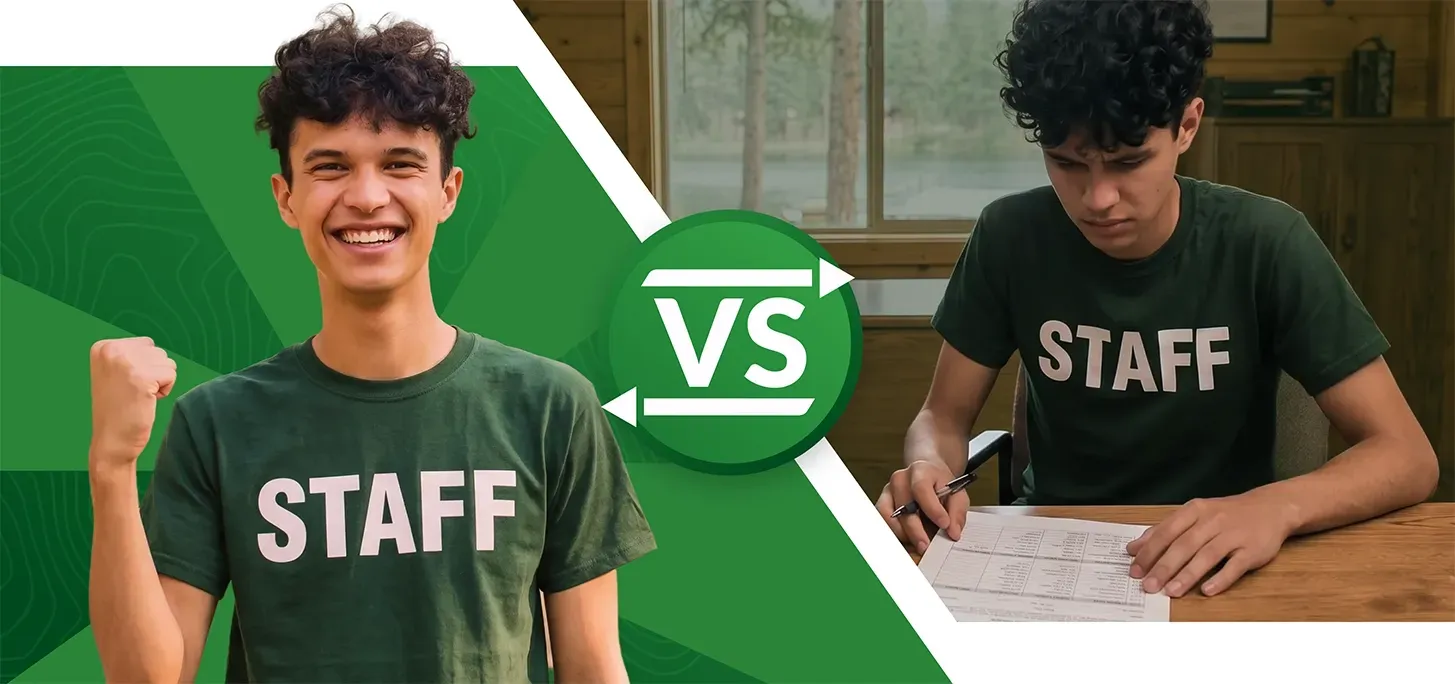
Mid-season camp staff evaluations help directors and supervisors correct small issues early and recognize strong performance before those moments get lost in the rush of summer.
Specific, actionable feedback does not sound like, “Good job. Hope to see you next year.”
It sounds like: “The way you handled that camper conflict during week three showed real maturity,” or “I noticed the energy dipped during that last activity. Let’s talk about how to recover faster next time.”
That kind of feedback helps a team member understand what strong performance looks like and how to keep growing.
The Golden Rule of Camp Staff Evaluations: No Surprises
Here’s the principle that separates a healthy evaluation culture from a harmful one:
Coach before you score.
By the time a counselor or staff member sits down for an evaluation, nothing in that conversation should be a surprise.
If a counselor receives a low score in coachability, that score should reflect conversations you have already had. It should not be the first time they hear there is a concern. If someone is struggling, they deserve feedback early enough to grow from it.
That might sound like: “I noticed you were on your phone during cabin downtime. That is not the standard we hold here, and I want to give you a chance to correct it.”
That is not overreacting. It's investment.
Then, when the evaluation comes, you can point back to that conversation: “We talked about this in week three, and I’ve seen real improvement,” or, “We’ve talked about this twice, and I have not seen the change I hoped for. Let’s be honest about what that means for the rest of the summer.”
Either way, the staff member has been treated with dignity. They were coached before they were evaluated.
What to Include in a Camp Counselor Evaluation
A helpful evaluation should focus on observed behavior, not potential, personality, or likability. Scores should be supported by specific examples.
Here are five camp counselor evaluation criteria to include:
These categories help move the conversation beyond “I like this counselor” or “they had a rough week.” They give camp leaders a more consistent way to evaluate the habits that shape camper safety, belonging, program energy, team culture, and parent trust.
A Simple 1–10 Rating Scale for Camp Staff
A rating scale only works if everyone understands what the numbers mean. Otherwise, a “7” from one supervisor may mean the same thing as a “5” from another. Define it.
The number is not the point. The conversation resulting from it is.
A score gives meaning to what you have observed.
When a director can say, “You're strong in camper relationships, but still developing in coachability. Let’s talk about that gap,” the feedback becomes actionable instead of personal.
What to Do After a Mid-Season Staff Evaluation
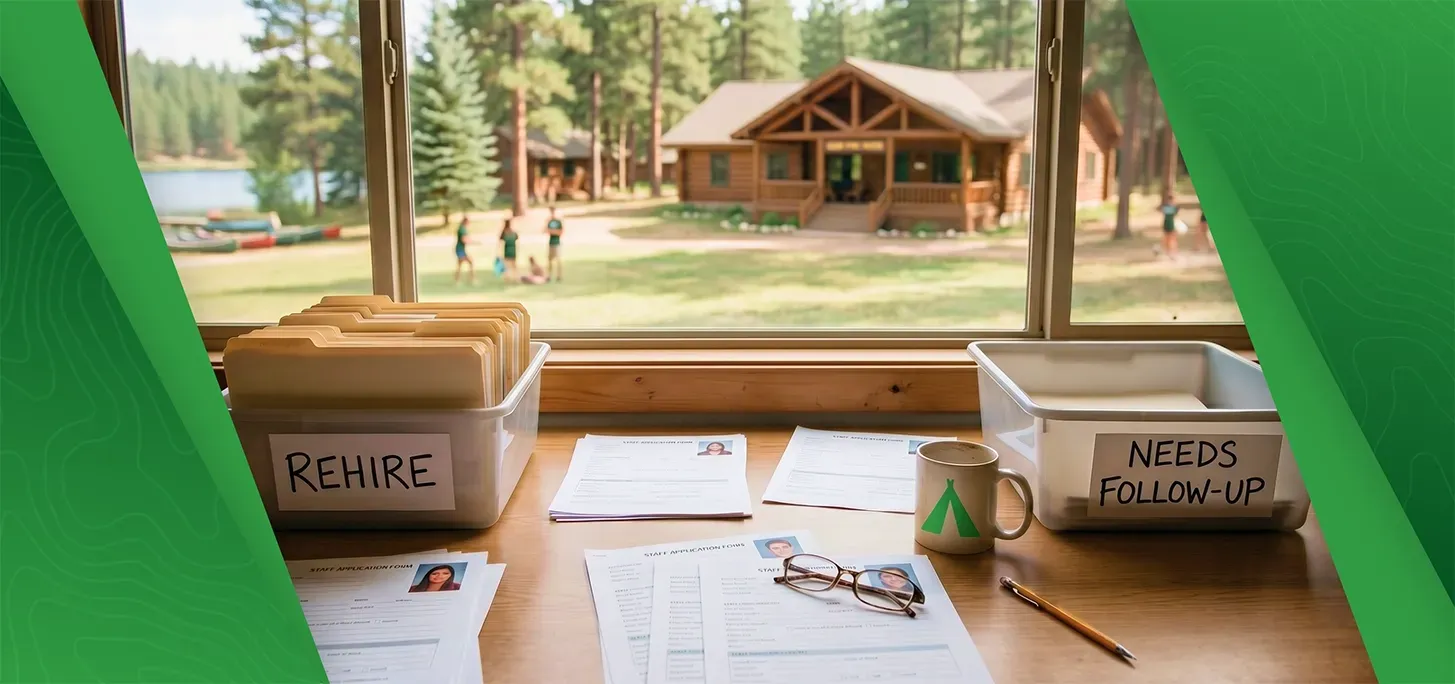
A mid-summer evaluation does not end when the form is finished. The follow-up is what turns feedback into staff development.
After each evaluation, document the conversation while the details are fresh. Set one or two clear goals for the rest of the season. Name the support the counselor needs from leadership. Schedule a follow-up check-in. Recognize improvement when you see it. Then use those notes later for end-of-season decisions.
The goal is not more paperwork. It's a clear record of coaching, growth, and observed behaviors.
That record helps camp leaders make better decisions.
Those decisions are easier, fairer, and defensible when based on documented leadership conversations, not one tired memory from the final week.
Best Practice: A Camp Staff Evaluation Framework that Drives Success
You already know that staff are one of the biggest factors in the quality of the camper experience. The right counselor can transform a cabin, stabilize a group, lift a program, and make a camper feel known.
The ACA captured it well when they quoted long-time camp director Jack Weiner: "With the right counselors, camp could be held in a parking lot."
Your best staff want to grow. Give them a framework for it.
Feedback is best when there's still time to improve. It's one of the most direct investments you can make in your camp team.
Mid-summer camp staff evaluations help you recognize and champion high-performing staff members early on while helping you coach the ones who are struggling.
How iCampPro Supports the Camp Staff Lifecycle
A strong evaluation process does not exist in a vacuum.
It's one piece of the full staff experience.
That's why iCampPro's Staff Hiring Module supports every stage:
Hiring with intention. Position types, application workflows, and offer/onboarding forms help you set clear expectations from first contact.
Managing rosters with clarity. Staff tools organize your roster by role, event, and position group, so you can see who is where, what they have committed to, and what context matters when giving feedback.
Retaining your best people. When done well, the evaluation process can be one of the most meaningful experiences you give a first-time staff member. It tells them: you matter here, your growth matters here, and we want you back.
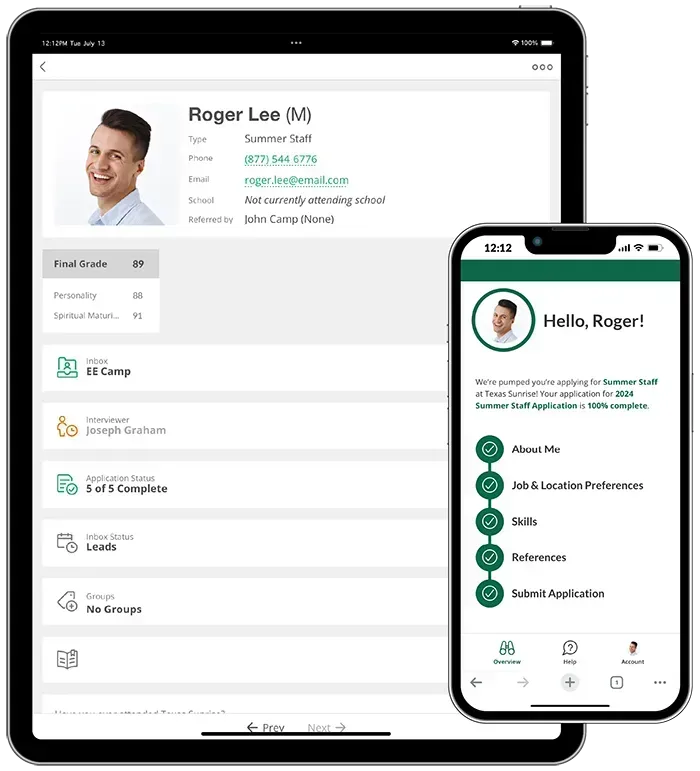
Staff development is a core function of your hiring and training process, not a single administrative task.
To learn how iCampPro supports camp staff recruitment, hired staff communications, and other daily camp operations—schedule a demo!