


Tips & Tricks to Deal with Reluctant Campers
Published June 27, 2024 | Updated April 20, 2026
At some point, every camp staff member will encounter a camper who feels unsure about joining in. Whether it’s hesitation, pulling back, or just needing more time to adjust, these moments are normal at camp.
Understanding what may be behind that reluctance—and knowing how to respond thoughtfully—can help create a more positive environment for everyone involved.
What is a Reluctant Camper?
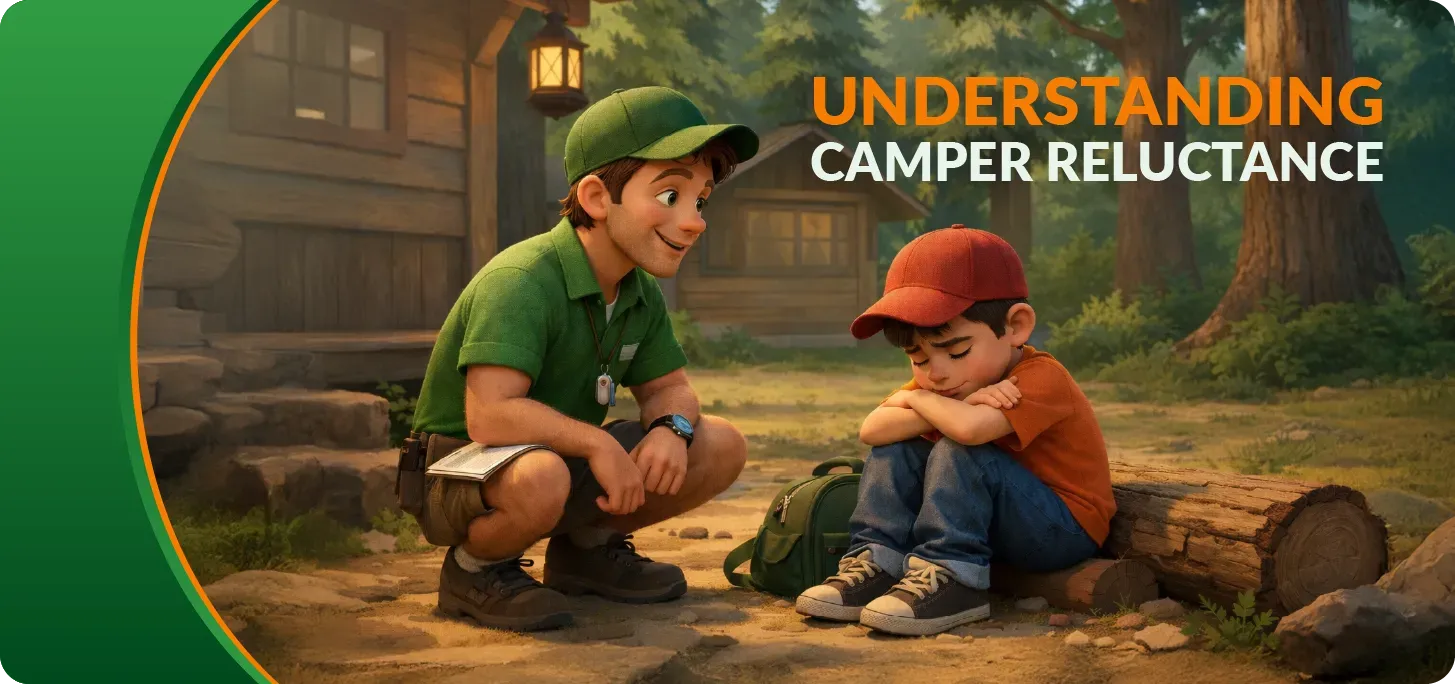
A reluctant camper is any camper who shows hesitation or resistance to participating in camp activities. It can look different for each camper, but often includes:
- Hanging back from group activities
- Avoiding new or unfamiliar experiences
- Expressing outward discomfort, frustration, or general disinterest
- Needing reassurance before joining in
Reluctance doesn’t always mean a camper won’t engage. It often just means they’re not ready yet.
Understanding Camper Reluctance
Camp is full of new experiences—new people, new routines, and new expectations. For some campers, that adjustment takes time.

Common reasons a camper may feel hesitant include:
- Being in an unfamiliar environment
- Navigating new social dynamics
- Worrying about trying something new or making mistakes
- Missing home or familiar routines
Every camper’s experience is different, and their response to these challenges can vary.
Some campers may arrive ready to dive in, but something in their behavior changes over time. It could be a sign of homesickness, the camper processing thoughts or emotions about an unrelated situation, or it could be a sign that something about the camp experience isn't going as planned.
However or whenever it starts, you’ve got a reluctant camper on your hands.
Before Taking Action, Consult Camp Policies & Training Materials
Before responding to a situation, it can be helpful to reference your camp’s internal guidelines and training materials. These resources are designed to support staff in handling a variety of camper situations.
Ask camp admins about prefrred icebreakers and conversation starters.
Each camp often has its own unique take on how to handle common awkwardness or distress like homesickness or feelings about belonging.
Understand how to identify and handle more complex situations.
Most camps already have clearly outlined staff policies for how staff members should handle more serious situations such as bullying, altercations, and other behavioral issues. Camp leaders will be most familiar with any local laws, guidelines, or restrictions on how (or when) to navigate these issues with campers.
If you’re unsure how to proceed, checking in with a supervisor or experienced team member can provide helpful context and direction.
This blog isn't meant to provide legal advice or to replace your staff training resources.
How Do You Recognize a Reluctant Camper?
Reluctance isn’t always obvious—it can show up in subtle ways.
You might notice a camper:
- Quietly observing rather than participating
- Hesitating when invited to join activities
- Sticking close to familiar people or counselors
- Expressing uncertainty or lack of interest
- Becoming easily frustrated or withdrawn
Learning to recognize these signs early can help you better understand what a camper may be experiencing.
Tips & Tricks to Help Reluctant Campers Gain Confidence
Every staff member at camp wants campers to enjoy their stay and take home fond memories form their experience.
For many struggling campers to get to that outcome, all they need is a little extra confidence. Your role is to help them find it. But first, you need to understand why they're not feeling confident to begin with.

Investigate Each Camper's Hesitancy with Patience
Campers might be anxious, homesick, or simply more introverted by nature. It’s important not to jump to conclusions and to do a little investigating. There are a lot of reasons why campers might be upset or a little disconnected.
To get a better understanding, stay open and receptive to the camper’s answers to questions such as:
- Do you understand the activity, or do you need help?
- How are you feeling?
- Is there something you need?
- Have you had any problems today?
- Is there something I can help you with?
- Are you feeling sick, or do you need a break?
Try to Identify Behavioral Triggers & Respect Boundaries
Reluctant campers are struggling with something. Avoid forced participation and respect their boundaries. They might not know why they feel a certain way, but most of the time they can tell you what they do or don't want in the moment.
Here are a few things to try:
- Watch the camper’s interactions for social obstacles.
- Listen for verbal cues such as “I can’t,” “I haven’t,” “I don’t know,” “At home, I,” and other cues indicating physical, emotional, or behavioral boundaries.
- If they struggle with an activity, build their confidence by emphasizing the importance of a positive experience over skill level.
- Break the activity into smaller steps or differently sized groups to explore comfort zones.
- Ask if there is a change that could be made to the activity that would help them participate.
- Adjust the activity to try to incorporate their interests.

Provide Gentle Encouragement to Forge a Positive Connection
Forced participation never feels good.
Sometimes allowing a camper to safely sit out is the best approach. This is a judgement call that every camp team will handle differently.
But sometimes, some gentle encouragement is all the camper needs to adjust.
Try these simple phrases:
- “I know you can do it.”
- “I/We will help you do it.”
- “If you don’t try, you don’t know if you enjoy it.”
- “I would be very proud of you if you would try.”
- “You can choose who you want to be in this moment.”
- “You can choose how this moment affects you/your fellow campers.”
Show Empathy While Maintaining Positivity
The primary goal should be helping the camper understand their feelings.
Building that connection can take time. Acknowledge the feelings they share. If possible, share experiences when you've felt similar emotions.
If the camper doesn't want to continue a conversation, let them know you can pick it back up later. Then try lightening the mood with a silly joke. Or if things feel pretty tense, you can suggest healthy ways to express their feelings to help them feel more in control.
For more serious issues, discuss next steps to get the camper help using the camp resources outlined in your staff training materials.
Simply knowing the next step can sometimes help a camper through a tough moment.

Seek Additional Help When Needed
If you’ve tried your best to address a camper’s issue and you’re still struggling – seek help from more experienced staff.
There could be boundaries that prevent the camper from working with you, specifically, to solve their problem. In these scenarios, a new friendly face can help.
Of course, some problems are best handled by trained professionals with experience in physical or emotional distress.
What Works Best Will Vary From Camper to Camper
There’s no single solution or hack for dealing with reluctant campers.
But here are some key takeaways:
- Camper safety always comes first.
- Remain patient and cooperative.
- Stay calm and level-headed, even if the camper’s behavior gets out of hand.
- If you’re struggling to manage the situation effectively on your own, seek help.
For more tips from camp staff about handling reluctant campers, check out our
2023 Camp Trends and Advice resource, created from answers to a survey conducted by iCampPro.