
Summer Camp Health & Safety Planning Guide for Camp Leaders

Summer camp has always been about adventure, connection, and growth. But in today’s environment, camp health and safety requires more planning and attention than ever before.
If you’re reviewing your camp’s health and safety plans, this article is a great place to start.
Why Conversations About Camp Health & Safety are Evolving
In recent years, many camps faced unexpected challenges.
Camps are navigating rapid, complex changes in health and safety. From extreme weather events to COVID-era policy shifts and resurging illnesses like measles.
A recent example of changing policies is Texas SB 1. This bill passed after severe weather in 2025 caused tragic outcomes. The result was fast, sweeping changes to safety regulations for youth summer camps in Texas. New rules address concerns over flooding, warning systems, evacuation plans, staff training, and where camps can build structures.
Organizations like the American Camp Association (ACA) are also advocating for camps through initiatives like the Congressional Camp Caucus. Its goal is to ensure that summer camps remain part of national legislative conversations about youth safety and development.
As conversations and regulations evolve, it’s clear that modern summer camp safety depends on proactive planning and operations.
As a trusted camp software provider, iCampPro works with camps to add supporting tools. They include camper forms and communication features, clarifying health management workflows, and helping camp teams with daily tasks.
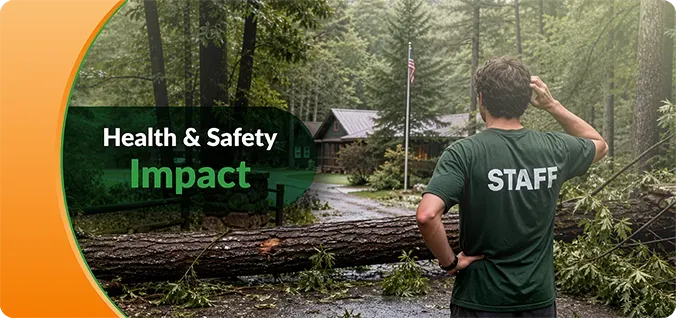
How Do Changes to Summer Camp Health & Safety Impact Camp Leaders?
Recent and sometimes painful moments in camp management reinforce an important truth. Even well-run camps must be ready for the unexpected.
A Quick (But Important) Note
This guide provides general best practices and is not intended as legal or medical advice.
Every camp operates under state and local regulations, licensing requirements, federal laws, and even some international legal considerations.
Always consult legal, medical, and regulatory professionals before implementing new policies.
Why Defining Camp Health & Safety Procedures Matters More Than Ever
Even the most thorough camp health and safety checklist cannot eliminate risk entirely. But it can significantly reduce it.
Today’s families know it and expect transparency and preparedness from camps.
They’re asking:
- What happens in an emergency?
- How are illnesses handled?
- Is my child safe from environmental risks?
- How do I stay in the loop with what’s happening at camp?
Camps that proactively address these concerns don’t just reduce risk. They build trust and increase enrollment confidence.

8 Categories to Consider Reviewing for Camp Health & Safety
Use the following categories as your framework for building a comprehensive camp health and safety checklist. Resources like the ACA’s Healthy Camp Toolbox and Camp Security guidance can provide frameworks to strengthen your planning.
Category 1 | Emergency Preparedness & Camp Crisis Planning
A strong emergency plan is the foundation of summer camp safety.
Camp Safety Checklist – Emergency Planning:
- Review and update Emergency Action Plans (EAPs)
- Evaluate outside visitor access, property entry points, and site vulnerabilities
- Consider on-site equipment to monitor high-risk areas for weather-related events
- Define roles, responsibilities, and emergency coordination procedures
- Train and practice on communication protocols
- Conduct drills as a point of reference when facing a real emergency
The ACA recommends assessing both environmental risks and operational factors. This ensures your camp safety checklist reflects your unique location and setup.
Some common emergency action plans cover relevant weather-related events like extreme heat, floods, earthquakes, landslides, fires, or storms. Others you don’t want to overlook include missing camper or active shooter scenarios.

Practice your plans regularly. Preparation and relevance is what makes them effective.
Category 2 | Health Screening & Illness Prevention at Camp
Prevention is a critical part of any effective camp health checklist.
Camp Health Checklist – Screening & Prevention:
- Collect and review health forms before camp begins
- Track and manage medications, allergies, and special needs
- Promote hygiene and sanitation routines
- Plan for easy hydration and sunscreen application during outdoor activities
- Establish health screening protocols for fast and consistent response
- Communicate clear illness and exclusion policies
- Create health-related isolation protocols
Ongoing monitoring of physical, mental, emotional, and social health ensures a more complete approach to camp health and safety.
Clear policies shared with families ahead of time reduce confusion and build trust.
Category 3 | Staff Training & Accountability
Well-trained staff are essential to maintaining summer camp health & safety.
Camp Safety Checklist – Staff Readiness:
- Track staff with CPR, first aid, and emergency response training
- Define camper supervision ratios and responsibilities
- Create standardized incident reporting procedures
- Schedule pre-session staff training reminders, as well as drills or refreshers
ACA standards emphasize consistent training and qualified supervision as core camp health best practices.
Consistent training across all staff levels and regular review improves safety outcomes.
Category 4 | Environmental & Facility Safety
Maintaining a safe environment is a key component of any camp safety checklist.
Camp Safety Checklist – Grounds & Facilities:
- Regularly inspect cabins, activity areas, and shared spaces
- Periodically evaluate environmental risks (heat, flooding, terrain)
- Appoint team members to actively monitor weather and environmental risks
- Review transportation procedures and maintain vehicles
- Maintain and inspect equipment, roads, docks, and access points
Schedule routine reassessments of these risks—conditions are likely to change year to year, but sometimes as often as day to day.
Category 5 | Communication & Parent Confidence
Effective communication is critical to effective camp health and safety.
Camp Safety Checklist – Communications:
- Set expectations for communication with families before camp
- Provide timely updates during incidents
- Maintain centralized health and safety records to enable fast communication
- Ensure consistent staff communication with scripted practice
When in doubt, over-communicate with families. Transparency builds long-term trust.
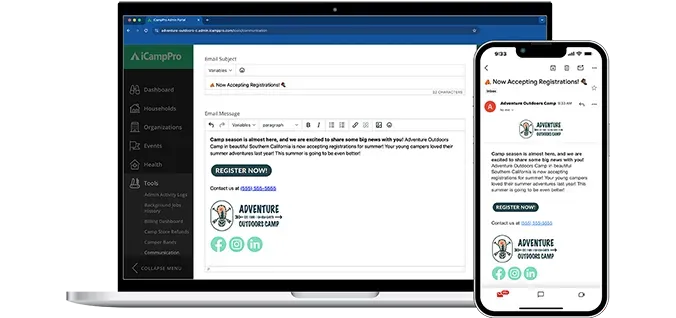
Improve parent communications with iCampPro to boost confidence in your summer camp operations!
Category 6 | Policy Review & Compliance
Compliance is a foundational part of any camp health checklist.
Camp Health Checklist – Compliance Review:
- Review local, state, and federal requirements
- Align with ACA or similar accreditation standards
- Document policies clearly and incorporate staff and parent feedback
- Conduct regular pre-season and pre-event audits
Treat compliance as an ongoing process—not a one-time task.
Category 7 | Mental, Emotional & Social Health (MESH)
Modern camp health and safety go beyond physical care and medication administration.
The ACA emphasizes the importance of comprehensive care. Supporting mental, emotional, and social health (MESH+) is all part of what they consider to be a complete camp health checklist.
Camp Health Checklist – Common MESH (+) Practices:
- Plan to support campers with homesickness, grief, trauma, or anxiety
- Build programs that promote resilience and confidence
- Train staff to recognize early emotional or behavioral concerns
- Document and track behavioral concerns internally
- Plan how to help families get campers the care they need
Camps that prioritize the MESH (+) framework often see better camper outcomes and fewer incidents.
Category 8 | Electronic Health Records, Documentation, & Technology
Accurate and accessible records are essential for both care and compliance. Teams need a single source of truth for camper care.
Camp Health Checklist – Best Practices:
- Electronic medication administration records (eMAR) provide accuracy & access
- Ensure quick access to critical medical information provided by families
- Standardize documentation for illness and incidents at camp
Use digital systems to support camp health initiatives, reduce errors, and improve efficiency.
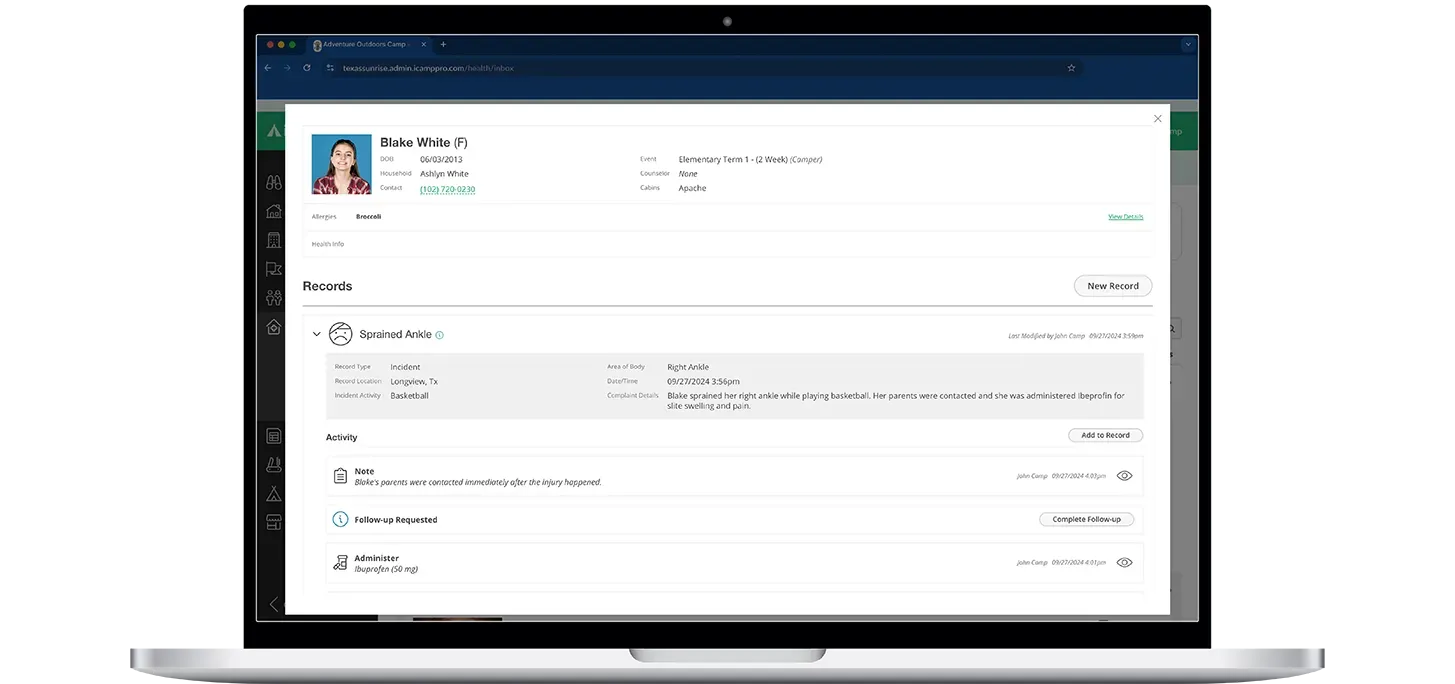
Streamline your camp health processes with one centralized system using iCampPro. From digital health forms to real-time record access.
Staff Training on Camp Health & Safety Policies
Many safety frameworks emphasize consistent, repeatable checks to ensure that safety isn’t just planned but practiced daily.
Use this checklist to inspire policies and ensure your camp team is prepared to launch a safe and successful camp season.
Of course, you should start with providing easy access to your plans, policies, relevant laws, and compliance certifications:
- Emergency action plans (fire, flood, tornado/severe storm, active threats)
- Health and illness policies (handwashing, isolation protocols)
- Compliance and legal concerns (accreditations, inspections, plus local, state, & national laws)

Then develop onboarding and continued training that places emphasis on how staff should take action.
Hands-on role play, routine practice drills, and call-and-response memory tools can be very effective. They help deliver fast and memorable group training or refreshers.
Staff Readiness Training
- Establish clear roles and team hierarchy
- Prioritize specialty training like CPR and first aid in new hires
- Conduct emergency drills
Camper Health Response Training
- Recognizing camper distress (mental, physical, emotional)
- Where to send a sick camper
- What to do if a camper is injured
- Location of first aid supplies
- Awareness of campers with special needs or medications
Facilities & Environment Training
- Assessing one’s environment for risks (plants, wildlife, hazards)
- Appropriate safety gear or PPE related to role and activities
- Relevant safety inspections (fire extinguishers, sprinklers, equipment)
- Proper equipment storage & maintenance
Communications Training
- Parent communication procedures
- Emergency systems awareness
- Escalation procedures

Bring It All Together: Enhancing Summer Camp Safety
Promoting health and safety at camp isn’t just about compliance with laws and regulations.
It’s about creating a safe, supportive environment where campers can thrive.
When families see your preparations and their campers feel confident in your care, everything else falls into place. It all leads to more connection, more confidence, and more unforgettable camp moments.
As health and safety expectations evolve, camps that plan ahead and train staff well will stand out.
Having the right tools to back your staff’s efforts can make all the difference.
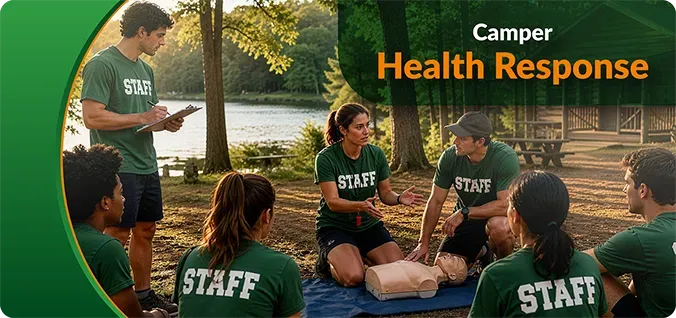
Ready to simplify your camp health and safety processes this summer?
iCampPro helps camps streamline health and safety management.
- Digital forms and electronic medication administration records help nurses and teams manage daily camp health.
- Communication and reporting tools give your team enhanced insights and transparency.
- Admins can spend less time managing paperwork and more time focusing on what matters most: the camp experience.