


Post-Summer Camp Evaluation: Turn Lessons into Next-Season Action

Review your staff, programs, safety, operations, and camper experience—then turn this season’s lessons into clear, accountable action plans for next season.
Congrats! You've Made It Through Another Busy Summer
You closed the gates. You hugged the last camper goodbye. You watched the last shuttle van pull away.
Then you collapsed. That’s fair—you earned it.
Now comes the part that is all too easy to postpone: deciding what this season should teach you about the next one.
The staff who excelled, the activity that consistently fell flat, and the facility issue that kept resurfacing are still fresh in your mind. If you fail to document those lessons now, they may be difficult to tackle later.
We've all seen it happen: directors and camp leaders who spent the whole summer mentally cataloging what needed to change, then arrived at spring planning without a single note to show for it.
It underscores the importance of conducting a post-summer camp evaluation as a team. Not a quick feedback survey, but a structured debrief.
Last month, the
mid-summer camp staff evaluation blog focused on coaching staff while they still have time to improve. A post-summer camp evaluation applies that concept to your whole camp operation.
What Is a Post-Summer Camp Evaluation? Why Bother?
Because impressions fade and specifics matter.
A post-summer camp evaluation is a structured leadership debrief conducted within a few weeks of the season’s end. It combines team observations with documented results to identify what should be protected, changed, or measured next season.
Don't just take our word for it! This approach aligns with the American Camp Association’s continuous program improvement philosophy.
Many camps conduct this review during a post-season staff retreat or leadership meeting before fall priorities take over. It helps leadership teams be pro-active about spring prep and assign clear next steps before important details get lost in the post-summer haze.
When Should You Complete the Camp Evaluation?
Give leaders time to rest, but meet while they can still recall specific staff, program, check-in, and facility challenges—ideally within two weeks of the season’s end.
Why? Specific observations make the evaluation more actionable. “Cross-team communication needs work” is difficult to address. “The health team did not receive updated instructions before medication check-in” identifies a process your team can examine and improve.
Who Should Participate in a Camp’s Post-Season Review?
Include leaders who understand what happened and can help own the response.
Depending on your camp, that list of people may include:
- Owner(s), executives, and camp directors
- Program directors and operations managers
- Health, food service, and grounds or facilities managers
- Camp registrars
- Camp finance or accounting leads
- Seasonal staff supervisors
Before the meeting, assign leaders to gather relevant feedback and data from their areas. Not everyone needs to attend every session; involve the people needed for each topic and bring the full team together for cross-department decisions. For each session, designate a facilitator and someone to record decisions and next steps.
Setting the Right Tone for Post-Summer Camp Evaluations
A productive debrief is more than a recap of what everyone liked or disliked—and it should not become an open-ended venting session.
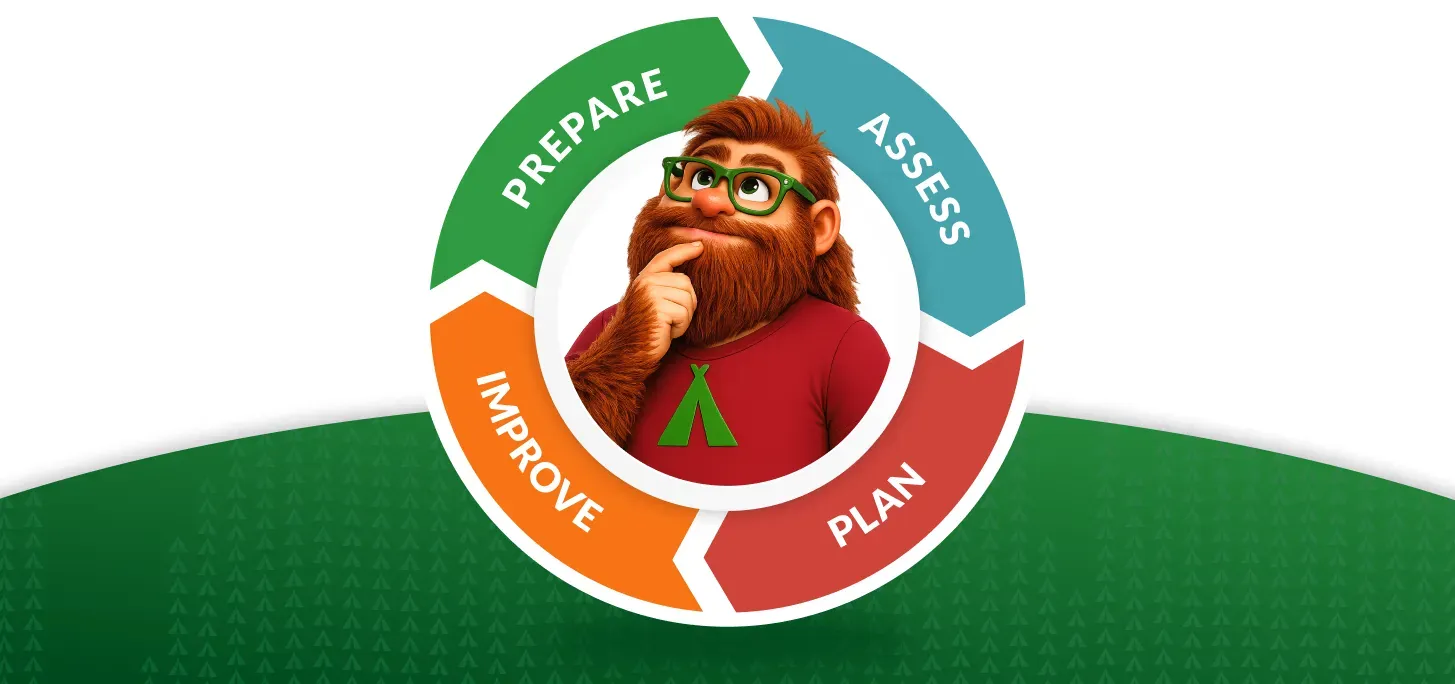
At its best, the process answers four questions:
- What should we protect because it worked?
- What should we change or test because it did not?
- What should we prepare to measure next season?
Use these questions to guide your review of the six connected areas below.
What Should a Camp Evaluate After Summer is Over?
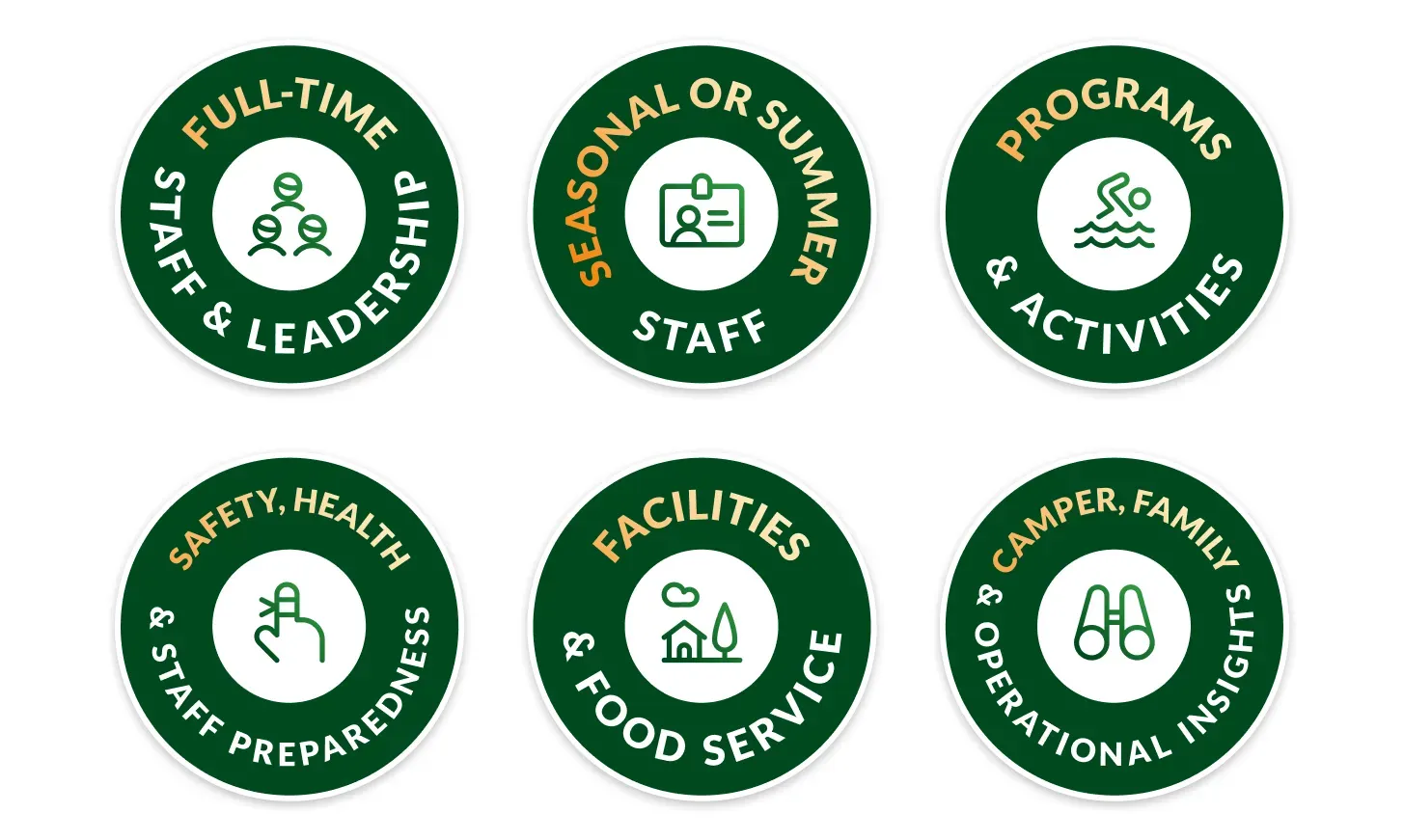
A complete post-summer evaluation should examine six connected areas of camp performance and operations.
1 | Full-Time Camp Staff & Leadership Review
Leadership reviews help camps recognize strong performance and address recurring gaps before the next season.
Evaluate each team member’s responsibilities, leadership, collaboration, and support needs. Use the findings to clarify roles, plan training, and prepare for future coverage.
Your full-time team carries the season. Identify leadership successes and recurring gaps
2 | Seasonal or Summer Staff Review
Review seasonal staff promptly. Your strongest team members may already be considering next summer, so communicate return decisions while the season is still fresh.
Summer staff are at the heart of all camper experiences.
If they're not into it, their campers can feel it. It can make or break your summer.
Categorize each summer staffer on your roster and classify them honestly:
- Invite back —
Reach out early to stars and rising stars. A personal message from you, as a former camp director who knows exactly what their summer meant, carries enormous weight.
Don't delegate this.
- Needs conversation —
These staff have real potential but their return may be conditional. Something specific needs to be addressed. Write it down so the conversation is clear and fair when they submit their next application or set up an interview.
- No return — Be honest. Every role you give to a staff member who isn't the right fit for your camp is taking a role from someone who is. Provide honest, respectful feedback focused on fit and growth.
Pro Tip: Keep staff notes and return statuses where your hiring team will see them next season—not in an email thread or forgotten document. In iCampPro, these details remain visible in staff profiles through future Staffing Seasons.
Look beyond individual performance.
- If multiple counselors struggled with the same expectation, you may have a training gap.
- Recurring morale problems may point to workload, scheduling, time off, or leadership coverage.
- Shared traits among successful first-year counselors can also inform future recruiting.
A post-summer evaluation does not replace the need for individual staff evaluations. It should build on what is discussed and emphasized in pre-season training, mid-summer coaching, and individual end-of-season evaluations—not replace them.
3 | Camp Programs Review (Activities, Evening Programming, & Schedules)
Review staff and camper participation and feedback across activities and sessions to identify which programs strengthen or limit the camper experience.
Camper surveys, feedback stations around camp, and direct family comments can offer insights.
Feedback from campers or camp families directly.
Staff problems or concerns.
Which activities did campers request by name? Which drew recurring complaints? Decide whether those complaints reveal an opportunity to improve the activity or a reason to replace it.
Be specific about nighttime programming in particular. In my experience, it often gets the least attention in planning but produces the most memorable (or most chaotic) moments of a session. If a theme night worked brilliantly, document why. If campfire felt disconnected by week three, document that too.
4 | Safety, Health, & Staff Preparedness Review
These topics deserve their own honest reckoning.
Don’t just ask whether incidents occurred. Ask whether they were preventable—and what prevention should look like next season.
Review incidents by type, frequency, location, and contributing factors. Ask whether each pattern points to a training, protocol, resource, or supervision problem—and what should change before next summer.
Review incidents related to security risks, safety protocols, health concerns, HR-related incidents, and of course any family or camper complaints
Monitor ongoing staff and guardian feedback for concerns that slipped through the cracks.
Your review should also confirm that staff can access the relevant procedures and that families understand how common scenarios will be handled.
Pro Tip: In iCampPro, you can review and filter documented health incidents by a variety of criteria from the Universal Search to help you quickly spot trends. In addition to your website, you can also use FAQs and links under camp event setup to provide camp families with easy access to policies in the Customer Registration Portal.
Why do these areas need so much attention?
These are the core concerns of every family leaving their child in your care and every person applying to work at your camp.
Clear policies and consistent practices also strengthen safety as well as staff and family confidence.
5 | Camp Infrastructure (Facilities, Maintenance, & Food Service)
Facilities, food service, water, and waste systems are foundational to camp operations.
Nothing else works without them.
Review recurring problems even when the immediate issue has already been resolved; repeated issues may signal larger maintenance, vendor, staffing, or planning needs.
Maintenance – a leaky roof, plumbing that backed up more than once, a tree on property that's leaning more than it should.
You had at least one complaint about your menu. But was it a preference, a vendor issue, or a service problem?
Recurring facility issues may signal deferred maintenance that will become more expensive over time. Prioritize these problems before contractor availability becomes limited in the spring.
Also review food-service patterns that are difficult to correct mid-season, including dietary accommodations, meal timing, order quantities, and vendor consistency. They deserve attention now, so there's a clear plan in place when parents call with questions.
Pro Tip: iCampPro health-incident records can include where an illness or injury occurred, helping teams identify recurring facility or activity hazards. Learn more on our
Camp Health Management feature page.
6 | Camper, Family, & Operational Insights
Some campers may need additional support, return conditions, different programming, or a conversation about whether camp remains the right fit. Others may benefit from a personal invitation to return because of their growth or positive contribution to the community.
Document noteworthy situations and required family conversations where authorized staff can find them now, and again before next season’s registration; not in a private notebook or email thread.
Document everything noteworthy – the campers who were a really good fit and should be encouraged to return, as well as campers whose return requires further review.
Set up conversations with camp families whose campers struggled or were not a good fit.
Pro Tip: iCampPro supports household-level and camper notes. Household notes can be pinned to the top so they don't get lost. Certain internal camper notes can trigger warnings during staff-assisted registration and health workflows or prevent online registration, helping teams address concerns in real time. If you don't use iCampPro – it's still important to find a way to keep these notes and restrictions visible to staff.
What Other Camp Data Should Camp Leaders Bring to a Debrief?
Bring enough evidence to test the team’s memory without turning the debrief into an all-out reporting exercise. Useful inputs may include:
- Mid-summer staff coaching notes, end-of-season evaluations, and return recommendations
- Camper and family surveys, comments, and communication themes
- Incident, illness, medication, attendance, and pickup records
- Registration, form-completion, billing, and check-in or check-out friction
- Enrollment, capacity, waitlist, participation, and program-demand patterns
- Maintenance requests, food-service feedback, and department notes
Look for repeated patterns across sessions, groups, and sources.
Recurring problems may require action; recurring successes may reveal practices worth protecting or replicating.
How Do You Turn Camp Feedback & Observations into an Action Plan?
Reviewing these six operational areas together helps teams identify connections that separate surveys, reports, or department notes may miss.
For example, recurring check-in problems could involve family communications, staffing, incomplete forms, health information, or software setup—not just the check-in team.
But be careful. Conversation and evaluation without actionable planning can feel more like venting.
The point of this debrief isn't to find who was at fault. It's to find areas where you can act to produce a better outcome the next time it happens.
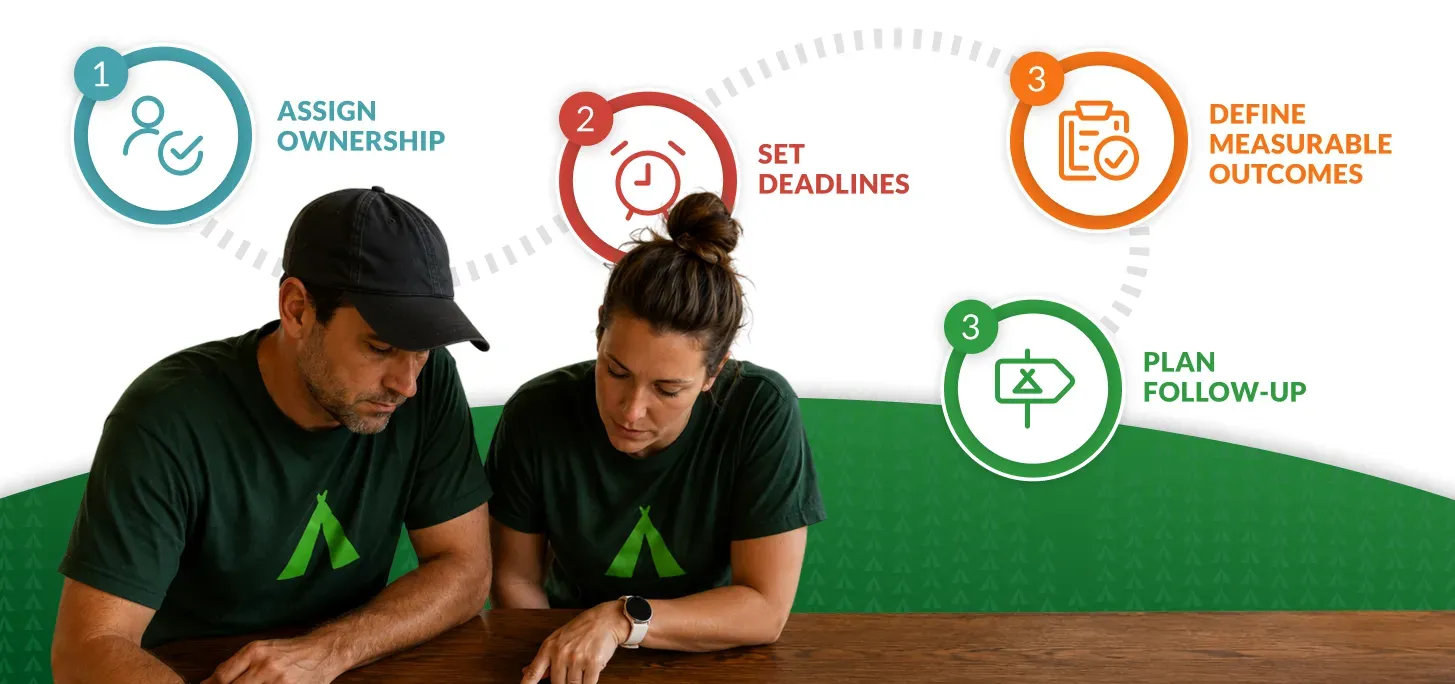
Every significant insight should lead to a concrete action item with an owner, deadline, measurable outcome, and follow-up date.
Takeaways are not a simple "we need to improve nighttime programming because it bombed" but:
✅ “Our program director, Sarah, will draft a revised Thursday schedule to improve participation by November 15; leadership approves it by January 15.”
Set measurable goals for next summer based on what you learned and discussed this summer.
Include plans to measure common KPIs year over year, such as:
- Staff retention rate
- Camper return percentage
- Number of safety incidents
- Parent satisfaction score
Pick metrics that matter to your camp and write them down now, so you can implement tools to measure them and compare results long-term.
This is how camps improve year over year instead of sifting through repeat problems and feedback.
Carry What You Learned into Your Next iCampPro Season
Your camp should not have to rely on vague memories when planning next season.
Your post-season findings can inform staff recruiting, application forms, pricing, registration policies, camper forms, group reservations, communications, health workflows, and staff training.
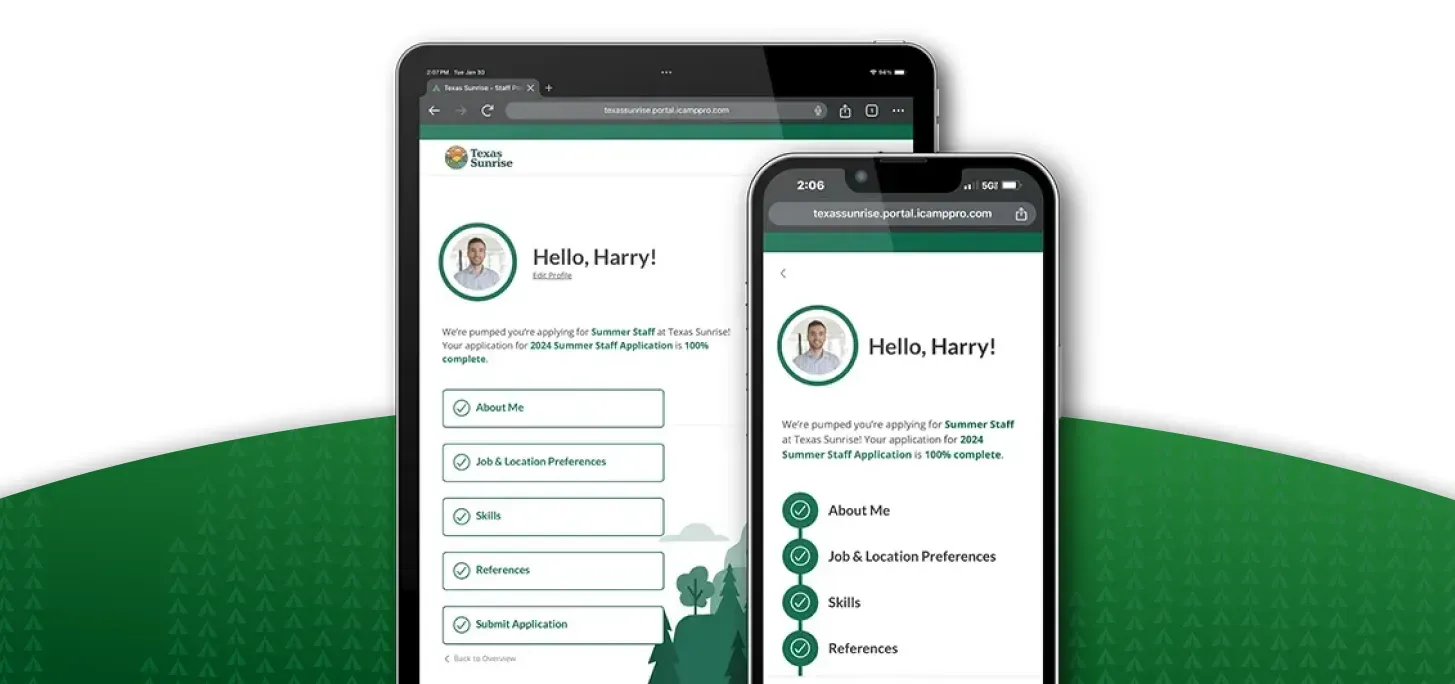
iCampPro helps keep these decisions connected in one camp management system. Before recruiting and registration open, your team can update its Staffing Season (rosters, applications, & interviews), configure next summer’s events (forms & pricing), and review policies, linked resources, and FAQs visible in the Customer Registration Portal.
Not a Customer Yet?
See how iCampPro can support your camp from staff recruiting through next-season planning.
Psst... Don't Forget to Celebrate!
Remember:
Celebrating your wins together is every bit as important as planning for the future!
🎉🥳
You've all worked hard to get through another amazing summer.
As your team helps you go through the review process, create space for compliments, creativity, celebrating successes, and to simply be the fun and collaborative camp-loving people you are!
Frequently Asked Questions
What is the purpose of a post-summer camp evaluation?
Its purpose is to preserve the season’s most useful lessons and turn them into clear decisions for staff, programs, safety, facilities, family experience, and operations.
How soon after summer should a camp complete its evaluation?
Ideally, hold the review within two weeks of camp ending—after leaders have had enough time to rest, but while specific observations are still fresh.
How is a post-summer evaluation different from a staff evaluation?
A staff evaluation focuses on one person’s performance and growth. A post-summer evaluation combines those records with program, safety, facility, camper, family, and operational data to identify whole-season patterns and opportunities to improve.
What should every camp improvement action item include?
Each action item should include a specific change, one owner, a deadline, a measurable outcome, and a follow-up date to support continuous improvement.