




12 Camp Leadership Tips for Opening Week Success

iCampPro understands camp management because we aim to hire people with real camp experience. Many members of our team are former campers, counselors, and even camp leaders themselves.

As a camp leader, after more than 20 years, I’ve learned this:
Opening week is one of the most important leadership moments you have all summer.
Not because of the schedule. But because of the people.
Families show up carrying a mix of excitement and nerves—and one unspoken question: “Are we doing this right?”
I’ve stood in those parking lots. I’ve talked with parents who are trying to be strong. I’ve watched campers take brave steps out of the car.
I’ve seen how the way we lead in those first moments shapes everything that follows.
Opening week isn’t just logistics. It’s leadership. So instead of responding to questions, it’s important to get ahead of them.
As camp leaders, let’s aim to give families clarity, confidence, and a simple plan.
Why Strong Leadership During Opening Week Matters
Parents don’t remember your camp as the place they visited. They remember how they felt dropping their child off.
I promise, this matters much more than you might think.
If they feel prepared, informed, and cared for, trust goes up.
If they feel confused or uncertain, they become anxious and lose trust.
Your job isn’t just to run a great camp program.
You help families feel confident about leaving their child in your care.
That trust building starts long before the camper steps foot on property.
Two Weeks Before Camp, You Start to Win or Lose Trust
This is where truly great camps lead well.
Good communication during these two weeks helps prevent unwanted surprises. It also helps families and campers get the best result.
First, Answer “What Should Parents Do Before Camp Starts?”
Encourage families to:
- Complete all forms early (medical, waivers, permissions)
- Double-check medications and instructions
- Reset campers’ sleep routines (this matters more than most realize)
- Label everything: clothes, bags, water bottles
- Review logistics (drop-off, pickup, travel details)

Tip #1
Give families a simple checklist, and you eliminate most of their stress before they ever arrive.
Camps that centralize forms, medical records, and parent communication often reduce confusion and improve family confidence.

Encourage Camper Involvement
Tip #2
Encourage parents to involve their camper in the preparation process.
Why? When kids help prepare, they show up with ownership—not hesitation.
- They have time to process the idea of something new and different.
- They’ll have time to ask questions and explore feelings in a safe space.
- They’ll know someone carefully chose the camp they’re headed to.
- They’ll know their bag is packed with everything they need.
Packing Smart (Keep It Simple)
Over packing creates stress. Under packing creates problems.
Your role is to help families find the middle.
Example Day Camp Essentials
- Backpack
- Water bottle
- Sunscreen
- Lunch/snacks (if needed)
- Weather layers (if needed)
- Authorized Pickup Person Decided/Communicated
Tip #3
For day camps, make the packing checklist easily repeatable.
Ask yourself: “Can a parent repeat this every morning without stress?”

Example Overnight Camp Essentials
- Trunk or duffel
- Clearly labeled bedding
- Comfort item (yes—even for older campers)
- Personal hygiene products (plus a bag or caddy)
- Weather layers (wind breaker and a hoodie, hat or sunglasses)
- Extra shoes
- Labeled laundry bag
- Labeled Water Bottle
- Letter-writing kit
Tip #4
For overnight camps, packing lists should focus on essentials and small comforts.
Focus on function, not perfection. Families don’t need a perfect list. They need a clear one.
How to Prepare Families for Camp Drop-Off Day
Over two decades in camp leadership, I’ve seen opening week run very well. I’ve also seen avoidable mistakes that create stress for families and staff.
Tip #5
One of the best things you can do for a parent leading up to camp is to remove the mystery.
Policies/Processes:
Walk families through processes before they arrive:
- Check-in process
- Health review and medications
- Swim ability checks (if applicable)
- Staff greetings (this is where trust is built in person)
- Cabin/group introductions
Make a short video. Write a one-pager. Dedicate an email.
Find a method that works for your team to clearly communicate what happens on day one before it begins.
Tip #6
Explain clearly why taking the time to review drop-off and other camp policies is important.
The first 5–10 minutes of camp matter most when setting the tone for a successful camp experience. Campers will pick up your confidence (or lack of it).
Staff is ready for day one. We need you to be ready, too.
Remind them:
- It’s okay if dropping a camper off feels quick
- A confident goodbye helps their child more than a long one
- Staff are trained for managing this transition

How Camps Can Educate Families on Homesickness
This is where families need leadership. Not guesswork.
Tip #7
Explain the difference between a truly homesick camper and a camper with normal nerves. They may just need a confidence boost.
Most kids will tell parents they miss them and express some level of discomfort. After all, camp is supposed to push children out of their comfort zone and help them grow through new experiences.
It’s normal for campers to experience:
- Quiet moments
- Hesitation early in the week
- Missing the comfort of home at night
What doesn’t help a camper transition:
- Repeated exit reassurance
- “If you don’t like it, I’ll come get you.”
- Long, emotional goodbyes
What helps campers stay open to the camp experience:
- Building consistency in how you talk about camp
- Encouraging self confidence
- Displaying trust in camp staff
Tip #8
Parents sometimes need a confidence boost too.
Reassure parents who may be struggling with letting go. Be direct. “You’re not leaving your child alone. You’re placing them with trained staff who know how to help them succeed.”
Set Expectations About Camp Communication Early
If you don’t define communication early on, families will. Usually in a way that creates more anxiety for themselves and for campers.
Tip #9
Clarity builds trust. Put clear policies in place for common scenarios.
Set expectations for core communications up front:
- Emails: cadence and purpose
- Routine questions: expected response time
- Emergency contact: how to reach camp for emergencies
- Photos: how often they’re posted and where
Outline when parents will be contacted if an issue arises with their child, including:
- Situations when early pick-up may be necessary
- Camper behaviors or health situations that require parent communication
Clarify the difference in organized communications based on event type:
- Day Camp: expect daily touchpoints and pickup conversations
- Overnight Camp: structured updates, less real-time communication
Tip #10
Stress that the goal isn’t constant communication. It’s clear communication.
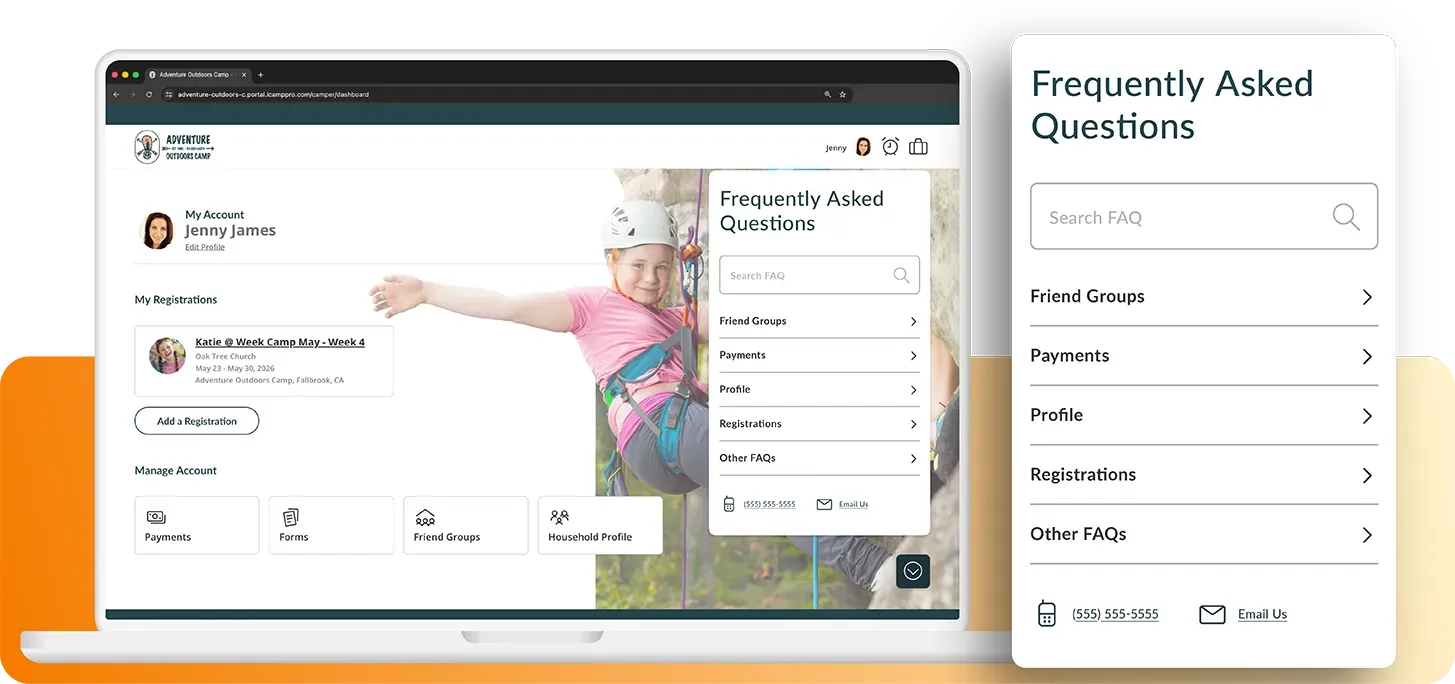
Did you know? iCampPro’s Registration Portal helps camps centralize FAQs and links to resources for completed registrations in one place?
Train Camp Staff How to Handle Parent FAQs Fast
Example Parent FAQs
Can my child bring a phone?
“No. We want campers to fully engage and build real relationships at camp.”
What if they forget something?
“We’ve got them. It happens. We’re prepped to handle it.”
How are medications handled?
“Through trained staff and a secure, structured process.”
Can friends be together?
“Yes (if allowed). The groups we’ve arranged are also balanced intentionally.”
What happens if it rains?
“Camp still happens. Just differently. We’re prepared.”
What about camper-to-camper bullying?
“We take it seriously. Our staff is trained to intervene quickly, coach behavior, and create a safe environment for every camper.”
Tip #11
Your staff should know the short and sweet answers to these common questions before the parent can finish asking.
Create Tools & Resources Families Can Hold Onto
Offer simple, downloadable tools:
- Camp Prep Checklist
- Arrival Day Guide
- Camp Policies
- Emergency Procedures
Give them something they can print, share, and come back to.
Tip #12
Don’t just explain, equip. Put policies, plans, and procedures in every family’s grasp.
Final Words of Encouragement
I can tell you that the camps families trust most aren’t necessarily the biggest or most expensive camps. They’re the camps that communicate clearly and lead confidently on and before day one.
If you do this well, you’re not just answering questions. You’re:
- Building trust before arrival
- Reducing anxiety across hundreds of families
- Setting your staff up for smoother transitions
- Creating a better at-camp experience for every camper
This is how great camps operate: Clarity. Consistency. Care.
And when families feel that from the very beginning, everything else gets easier.

Create a Smoother Opening Week Experience
See how iCampPro can help, by helping camps simplify:
- Flexible Camp Forms
- Camp Communications
- Friends, Cabins & Camper Groups
- Camp Check In & Attendance
- Health Management
Ready to talk to a member of my team about solutions?